




How to Start a Rabbit Feed Pellet Production Business
Starting a rabbit feed pellet production business is becoming an increasingly attractive opportunity in modern agriculture. As rabbit farming expands globally, the demand for high-quality, affordable, and nutritionally balanced feed continues to grow. Feed is the most important input in rabbit production, and it directly affects growth rate, reproduction performance, health status, and overall farm profitability.
Because of this strong demand, entrepreneurs and investors are turning toward feed manufacturing as a stable and scalable business model. With the help of modern equipment such as the rabbit pellet machine, it is now possible to produce consistent, high-quality rabbit feed pellets on a commercial scale. When combined with a complete livestock feed production line, the business becomes even more efficient and profitable.
This article provides a comprehensive step-by-step guide on how to start a rabbit feed pellet production business, covering market analysis, equipment selection, production process, investment planning, and long-term growth strategy.
1. Understanding the Rabbit Feed Market
Before starting any production business, understanding the market is essential. The rabbit feed industry is driven by several key factors:
- Growth of commercial rabbit farming
- Increasing demand for rabbit meat in many regions
- Expansion of organic and sustainable livestock farming
- Rising need for laboratory and breeding rabbits
- Demand for standardized feed quality
Rabbit feed is not just a basic agricultural product; it is a specialized nutritional formulation designed for sensitive animals. This makes the market more stable and less competitive than general livestock feed sectors.
The most important advantage is that rabbit feed demand is continuous. Farms must feed rabbits daily, which ensures a stable and recurring market.
2. Why Rabbit Feed Pellet Production Is a Profitable Business
A rabbit feed pellet production business is profitable for several reasons:
1. High and consistent demand
Rabbit farms require constant feed supply, creating long-term customers.
2. Value-added product
Raw agricultural materials such as corn, grass, and soybean meal are relatively cheap, but processed pellets have much higher value.
3. Stable profit margins
Feed pricing is less volatile compared to meat markets.
4. Multiple sales channels
Products can be sold to:
- Rabbit farms
- Feed distributors
- Agricultural cooperatives
- Export markets
5. Scalability
Production can start small and expand gradually.
3. Business Planning and Feasibility Study
A successful rabbit feed pellet production business starts with a clear business plan.
Key questions include:
- Who are your target customers?
- What is the production capacity needed?
- What raw materials are locally available?
- What is the competition in your region?
- What is the estimated startup cost?
A feasibility study helps determine whether investing in a rabbit pellet machine and full production system is financially viable.
4. Choosing the Right Production Equipment
Equipment selection is one of the most important decisions in this business.
A basic production setup includes:
- Crushing machine (hammer mill)
- Mixing machine
- Conveying system
- rabbit pellet machine
- Cooling machine
- Screening machine
- Packaging machine
For commercial-scale operations, a complete livestock feed production line is recommended.
This ensures:
- Higher efficiency
- Stable product quality
- Lower labor costs
- Continuous production
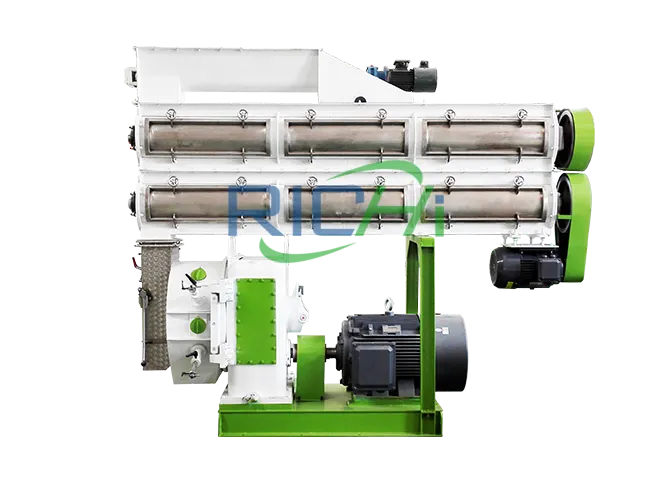
5. The Role of the Rabbit Pellet Machine
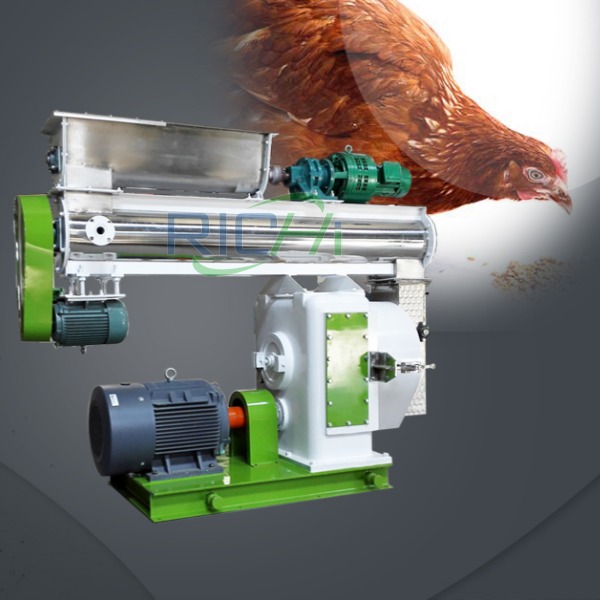
The rabbit pellet machine is the core equipment in the entire production system. It transforms powdered feed ingredients into compact, uniform pellets suitable for rabbit consumption.
https://pelletisingmachine.com/rabbit-feed-pellet-making-machine
How it works:
- Mixed feed enters the pellet chamber
- Rollers press material through a die
- High pressure forms dense pellets
- Pellets are cut to required length
- Finished pellets are discharged for cooling
Why it is essential:
- Produces uniform feed size
- Improves feed digestibility
- Reduces feed waste
- Prevents selective feeding by rabbits
- Enhances storage stability
Without a reliable rabbit pellet machine, feed quality cannot be guaranteed.
6. Raw Material Selection and Supply Chain
The success of a rabbit feed pellet production business depends heavily on raw material availability.
Common raw materials include:
- Alfalfa meal
- Grass powder
- Wheat bran
- Corn flour
- Soybean meal
- Rice bran
- Vitamin and mineral additives
A stable supply chain is necessary to ensure consistent production. Many businesses build partnerships with:
- Grain suppliers
- Agricultural cooperatives
- Milling factories
- Local farms
Cost control in raw materials directly affects profit margins.
7. Setting Up a Livestock Feed Production Line
A livestock feed production line integrates all production stages into one continuous system.
Typical workflow:
- Raw material receiving
- Grinding
- Mixing
- Pelletizing (rabbit pellet machine)
- Drying
- Cooling
- Screening
- Packaging
Advantages of a complete system include:
- High production efficiency
- Reduced manual labor
- Consistent feed quality
- Lower operating costs
For commercial businesses, automation is essential.
8. Production Process Explained Step by Step
Step 1: Grinding
Raw materials are crushed into fine powder using a hammer mill. Fine particles improve pellet quality.
Step 2: Mixing
All ingredients are blended to ensure uniform nutrition distribution.
Step 3: Pelletizing
The rabbit pellet machine compresses the mixture into solid pellets.
Step 4: Drying
Pellets are dried to reduce moisture content.
Step 5: Cooling
Hot pellets are cooled to stabilize structure.
Step 6: Screening
Broken pellets are removed.
Step 7: Packaging
Finished feed is packed into bags for sale.
9. Investment Cost Estimation
Starting a rabbit feed pellet production business requires initial capital investment in:
- Equipment purchase
- Factory setup
- Raw material stock
- Labor costs
- Electricity and maintenance
The scale of investment depends on production capacity:
- Small scale: low-cost rabbit pellet machine
- Medium scale: semi-automated livestock feed production line
- Large scale: fully automated industrial system
Although initial costs may seem high, long-term returns are strong.
10. Location Selection for Production Plant
Choosing the right location is important for cost efficiency.
Ideal locations should have:
- Access to raw materials
- Proximity to customers (rabbit farms)
- Affordable land cost
- Reliable electricity supply
- Good transportation infrastructure
Location affects logistics costs and profitability.
11. Labor and Management Requirements
A rabbit feed production business does not require a large workforce if automation is used.
Typical staff roles include:
- Machine operators
- Quality control technicians
- Maintenance staff
- Warehouse managers
- Sales personnel
Training is important to ensure smooth operation of the rabbit pellet machine and production line.
12. Quality Control in Feed Production
Quality control is critical in maintaining product competitiveness.
Key quality indicators include:
- Pellet hardness
- Nutritional balance
- Moisture content
- Pellet size consistency
- Cleanliness and safety
Regular testing ensures stable feed performance.
13. Marketing and Sales Strategy
To succeed in the rabbit feed business, strong marketing is essential.
Sales channels include:
- Direct sales to farms
- Feed distributors
- Agricultural supply stores
- Online platforms
- Export markets
Building long-term relationships with rabbit farms ensures stable revenue.
14. Profitability and Return on Investment
Profit comes from the difference between raw material cost and finished feed price.
Factors affecting profit include:
- Raw material prices
- Production efficiency
- Energy consumption
- Equipment maintenance cost
- Market demand
A well-managed livestock feed production line can generate stable and long-term profits.
15. Common Challenges in the Business
Some challenges include:
- Raw material price fluctuations
- Equipment maintenance issues
- Market competition
- Quality control difficulties
- Seasonal demand changes
However, these challenges can be managed with proper planning.
16. Future Development of Rabbit Feed Industry
The rabbit feed industry is expected to grow due to:
- Increasing demand for rabbit meat
- Expansion of commercial farming
- Adoption of automated feed systems
- Growth of export markets
Advanced rabbit pellet machine technology will continue improving efficiency and reducing production costs.
Conclusion
Starting a rabbit feed pellet production business is a profitable and sustainable investment opportunity in modern agriculture. With the help of a reliable rabbit pellet machine and a well-designed livestock feed pellet production line, entrepreneurs can produce high-quality rabbit feed efficiently and consistently.
Success in this industry depends on careful planning, proper equipment selection, stable raw material supply, and strong market strategy. As global rabbit farming continues to expand, demand for professional feed production systems will continue to grow, making this business a strong long-term investment opportunity.