


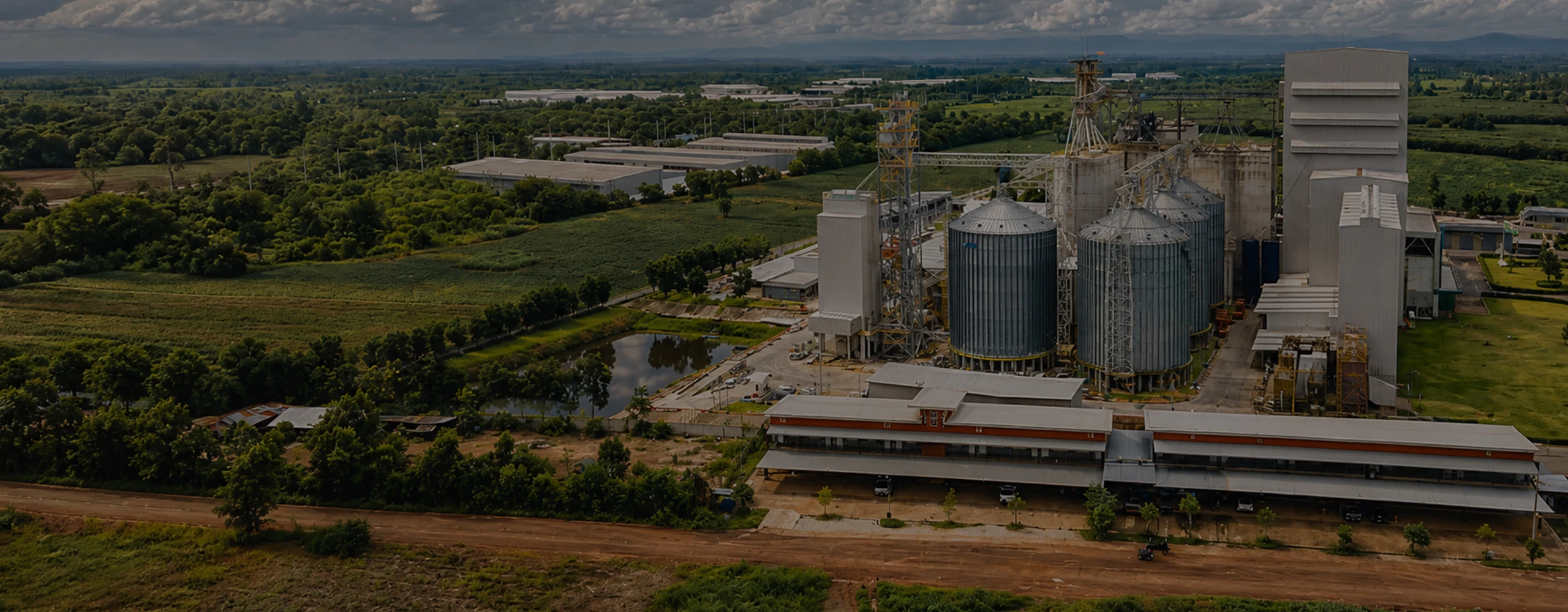
As livestock farming becomes increasingly specialized, feed production is no longer simply a matter of mixing grains and protein ingredients together. Different animals require different nutrient profiles, while farms and commercial feed manufacturers also have to consider raw material availability, production capacity, energy consumption, storage, and product consistency.
For anyone planning a new feed mill, the number of available machines can sometimes make the process seem more complicated than it really is. A better approach is to begin with the intended feed products and work backward toward the equipment configuration.
Whether the goal is to produce cattle feed, pig feed, sheep feed, or several types of livestock feed, the basic principle remains the same: the processing system should match the formula, capacity, raw materials, and final product requirements.
So, what should be considered before building a modern feed mill?
What Should Be Considered Before Designing a Feed Mill?
The first step is to identify exactly what the factory is expected to produce.
A farm producing feed exclusively for its own cattle may require a relatively simple system. A commercial manufacturer serving several livestock farms will probably need more storage bins, automated batching, flexible formulation management, and multiple finished-feed specifications.
Production volume is another important consideration. A small operation may process less than one ton per hour, whereas a commercial factory may require several tons per hour or even multiple production lines.
The desired level of automation should also be determined at an early stage. Manual systems can be practical for small operations, while automated weighing, batching, mixing, and control systems become increasingly useful as production volume increases.
In other words, equipment selection should come after the production requirements have been established.
Which Livestock Feed Products Can Be Manufactured?
A well-planned feed mill can be designed for one livestock category or several.
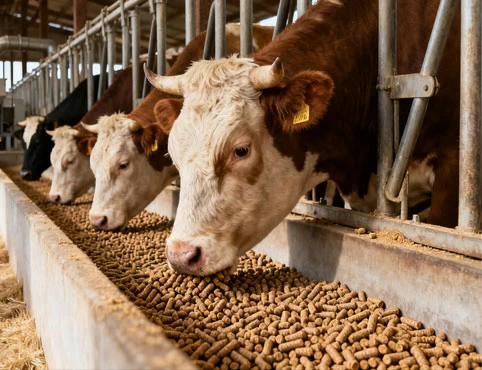
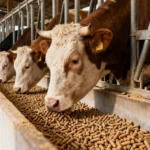
Cattle feed commonly includes corn, soybean meal, wheat bran, alfalfa, grass meal, minerals, vitamins, and other ingredients. Depending on the production stage, the formula may focus on milk production, maintenance, growth, or weight gain.
Pig feed usually requires a more carefully controlled combination of energy, protein, amino acids, minerals, and vitamins. Feed formulas also change according to piglet, grower, and finisher stages.
Sheep and goat feed may include grains, bran, protein sources, forage meals, minerals, and other ingredients. Some farms also produce specialty pellets containing a relatively high proportion of forage material.
Because these formulas have different physical and nutritional characteristics, the processing equipment should be selected according to the products rather than simply choosing a standard configuration.
How Should Raw Materials Be Selected?
Raw material availability can have a significant influence on the economics of feed production.
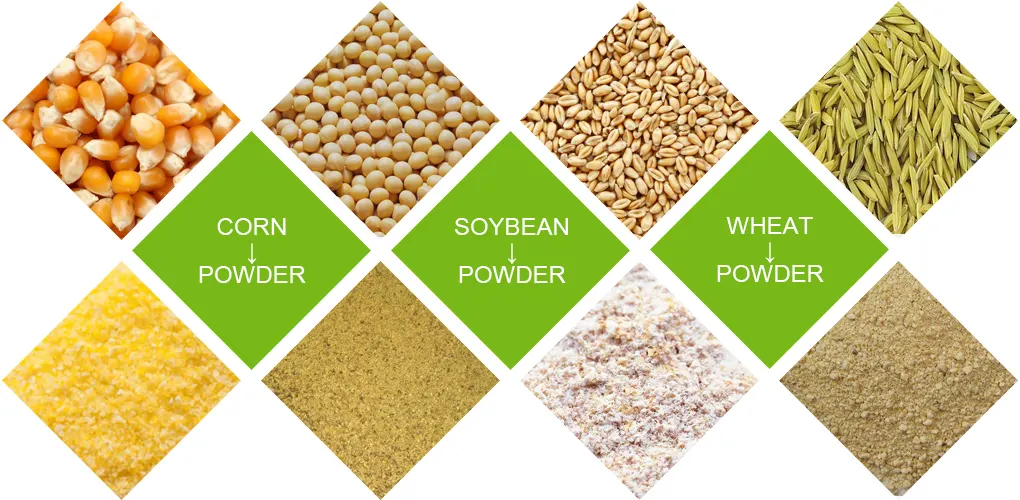
Corn is widely used as an energy source, while soybean meal is a common protein ingredient. Depending on the region, wheat, barley, sorghum, rice bran, cassava, rapeseed meal, cottonseed meal, and other agricultural by-products may also be available.
For ruminant feed, fibrous materials such as alfalfa and grass meal can play an important role. However, these materials behave differently during processing because of their higher fiber content and physical structure.
Before designing the processing line, it is useful to analyze the moisture, particle size, bulk density, hardness, and flowability of major ingredients.
Raw material storage should also be considered. Ingredients with high moisture content or poor storage stability may require additional handling and environmental controls.
How Do You Prepare a Pig Feed Formula?
Feed formulation should primarily be based on the nutritional requirements of the target animals.
A piglet formula, for example, is not simply a smaller version of a finishing pig formula. Younger animals may require different protein levels, amino acid profiles, energy density, minerals, and ingredient characteristics.
The cost and availability of ingredients are also important. A nutritionally suitable formula may need to be adjusted when the prices or availability of corn, soybean meal, wheat, or other ingredients change significantly.
For commercial production, formulas are generally developed with support from animal nutrition professionals. The processing system then needs to reproduce these formulas consistently through accurate dosing and effective mixing.
Why Is Grinding Important in Feed Production?
Grinding is one of the most common preparation stages in a feed mill.
The primary purpose is to reduce the particle size of grains and other suitable ingredients so that they can be mixed more uniformly and processed more effectively.
Hammer mills are widely used for this purpose. Different screen sizes can be selected according to the desired particle size and the properties of the raw material.
However, smaller particles are not automatically better. Excessive grinding can increase energy consumption and dust generation without necessarily improving feed performance.
The appropriate particle size depends on animal species, feed formulation, pellet specifications, and processing technology. For this reason, grinding parameters should be established through actual production requirements rather than using a single setting for every feed type.
What Is the Role of Batching in a Feed Mill?
Once raw materials have been prepared, they need to be measured according to the feed formula.
This is the role of the batching system.
A typical formula may contain several major ingredients as well as small quantities of vitamins, minerals, amino acids, and other additives. Accurate weighing is therefore essential, particularly when ingredients are used at relatively low inclusion rates.
A modern batching system may use electronic load cells and automated controls to measure ingredients according to preset formulas.
For a small plant, semi-automatic batching may be sufficient. Larger facilities often benefit from computerized systems that can store multiple recipes and automatically manage the dosing sequence.
Accurate batching also helps reduce material waste and makes it easier to maintain consistency between production batches.
Is Pelletizing Necessary for Livestock Feed?
Not every feed product needs to be pelleted.
Mash feed can be manufactured by grinding, batching, mixing, and packaging. It may be suitable for some farms and feeding systems.
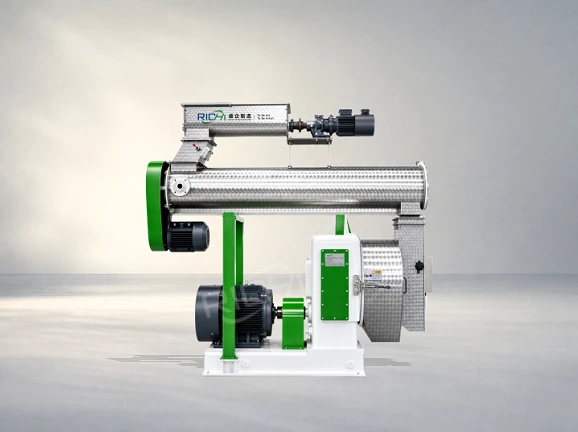
Pellet feed requires an additional compression stage. During pelletizing, the prepared feed mixture is forced through a die under pressure. The resulting pellets are then cooled and screened.
Pellets are generally easier to transport and handle. They can also reduce ingredient separation during storage and transportation compared with some mash products.
For commercial livestock feed manufacturers, pelletizing may therefore provide logistical and product-handling advantages.
What Is a Typical Feed Pellet Production Process?
A basic pellet feed process may follow this sequence:
Raw material receiving → cleaning → grinding → batching → mixing → conditioning → pelletizing → cooling → screening → packaging
Not every factory needs every stage. For example, a simple farm-based facility may have fewer storage and automation systems than a commercial plant.
Conditioning is often used before pelletizing to improve the physical characteristics of the feed mixture. Steam may be introduced depending on the formula and pelletizing requirements.
After pelletizing, the pellets normally need to be cooled. Screening then separates acceptable pellets from fines, which may be returned to the production process.
This process creates a continuous flow from incoming ingredients to finished feed.
What Does a 3–5 t/h Pig Feed Line Usually Include?
For manufacturers targeting several tons of pig feed per hour, production capacity needs to be considered as a complete system rather than the capacity of a single pellet mill.
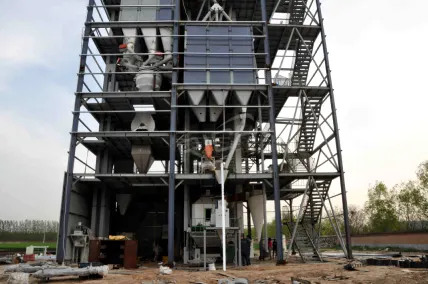
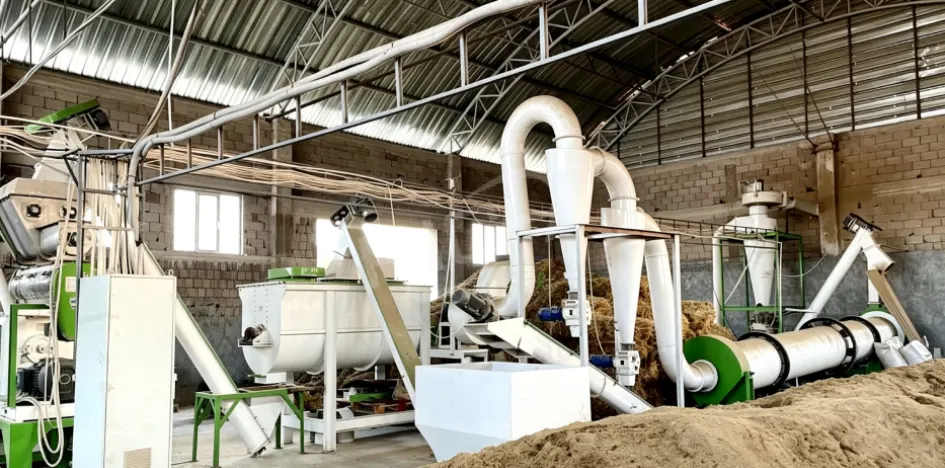
A 3-5t/h pig feed pellet production line may include raw material receiving equipment, cleaning machinery, hammer mills, batching systems, mixers, pellet mills, coolers, screening equipment, conveyors, and packing systems.
The actual configuration depends on the number of formulas, raw material types, pellet sizes, storage requirements, and desired automation level.
For example, a plant producing several pig feed formulas may require additional ingredient bins to reduce the time needed for formula changes.
Capacity should also be evaluated under real operating conditions. The rated output of individual machines does not always represent the actual continuous capacity of the complete line.
How Should a Feed Mill Be Laid Out?
Factory layout has a direct influence on material handling and maintenance.
Ideally, materials should move through the plant in a logical direction without unnecessary backtracking. Raw materials enter the receiving area, pass through preparation and processing stages, and eventually reach finished-product storage.
Vertical layouts are commonly used in some feed mills because gravity can assist material movement between processing stages.
Horizontal layouts may be more suitable for certain small facilities or buildings with height restrictions.
Maintenance access should also be considered. Motors, bearings, pellet mills, hammer mills, and other major equipment require regular inspection.
A layout that maximizes equipment density but leaves insufficient maintenance space can create problems later.
How Long Does It Take to Build a Feed Mill?
There is no single construction timeline that applies to every project.
A small livestock feed mill may require a relatively short installation period once the equipment and workshop are ready. Larger plants take longer because they involve civil construction, storage structures, electrical installation, equipment assembly, commissioning, and operator training.
The equipment manufacturing schedule is only one part of the overall project.
Investors should also consider site preparation, foundation work, transportation, customs clearance where applicable, installation, testing, and final commissioning.
A detailed project schedule can help coordinate these activities and reduce unnecessary delays.
Should a Small Feed Mill Be Automated?
Automation should be based on production requirements rather than treated as an objective by itself.
For a small farm, manual or semi-automatic operations may be practical. As production increases, automated batching and centralized control become increasingly useful.
Automation can help reduce repetitive manual work, improve weighing accuracy, record production data, and manage multiple feed formulas.
At the same time, automation introduces additional electrical and control components that require maintenance and trained personnel.
The most appropriate solution is therefore the level of automation that provides measurable operational benefits without creating unnecessary complexity.
How Should Feed Mill Equipment Be Selected?
Equipment selection should begin with the raw materials and finished products.
A supplier needs to understand the target capacity, formulas, pellet diameter, moisture levels, available ingredients, operating hours, and site conditions before proposing a complete configuration.
It is also useful to examine technical documentation, process diagrams, equipment specifications, spare-parts availability, installation support, and after-sales service.
For readers researching manufacturers and their capabilities, going here can be used as an internal link to the company’s About Us page, where additional background information can be provided without interrupting the technical discussion.
This type of supporting information can be useful when comparing different suppliers because feed mill projects often require more than individual machines.
What Factors Influence the Total Investment?
The cost of a feed mill is influenced by many variables.
The major factors normally include:
- Production capacity
- Number of feed formulas
- Raw material storage capacity
- Type and quantity of processing equipment
- Automation level
- Building and civil construction
- Electrical installation
- Dust collection
- Packaging system
- Cooling and screening requirements
- Installation and commissioning
- Transportation and logistics
For this reason, quoting a complete plant based only on a target capacity can be misleading.
Two plants with the same nominal output may have very different configurations if one produces a single feed formula while the other handles multiple livestock species.
Related Post: https://commercialpelletmill.com/cattle-feed-plant-cost/
What Should Be Prepared Before Requesting a Project Proposal?
Preparing basic technical information can make communication with equipment manufacturers much more efficient.
The buyer should ideally provide:
1. Target livestock species:
Cattle, pigs, sheep, goats, or multiple species.
2. Required capacity:
For example, tons per hour and expected working hours per day.
3. Raw materials:
Main ingredients, moisture levels, particle characteristics, and seasonal availability.
4. Feed formulas:
Approximate ingredient proportions and expected product categories.
5. Final product:
Mash feed, pellets, or both.
6. Pellet specifications:
Required pellet diameters and product types.
7. Site information:
Available land, workshop dimensions, electricity supply, and local construction conditions.
8. Storage requirements:
Expected raw material and finished-feed inventory.
9. Future expansion:
Potential increases in capacity or additional feed products.
The more complete this information is, the easier it is to develop a processing system that reflects actual operating conditions.
How Can a Feed Mill Remain Efficient Over Time?
A feed mill should be designed not only for its first year of production but also for long-term operation.
Routine maintenance is particularly important for equipment with wear components. Hammer screens, hammers, pellet mill dies, rollers, bearings, knives, and other components should be inspected regularly.
Operators should also monitor electricity consumption, production output, pellet quality, moisture levels, and downtime.
If energy consumption suddenly increases or production capacity declines, the cause may be worn components, inappropriate operating parameters, raw material changes, or equipment problems.
Regular monitoring makes it easier to identify these issues before they develop into larger production interruptions.
What Is the Most Practical Way to Plan a Feed Mill?
The most practical approach is to start with the product rather than the machine.
First determine what animals the feed will serve. Then establish the nutritional formulas and raw material sources. After that, calculate the required capacity and decide whether the final product will be mash or pellets.
Only then should the processing sequence and equipment configuration be finalized.
For larger projects, working with an experienced engineering team can also help integrate material handling, storage, processing, electrical systems, automation, and packaging into one coordinated layout.
Manufacturers such as RICHI Pelletizer may be considered during the equipment research stage, particularly when comparing different feed-processing configurations and production capacities.
Conclusion: What Makes a Well-Planned Feed Mill?
A successful feed mill is not necessarily the one with the largest machines or the highest level of automation. Its value comes from how well the individual parts work together.
The raw materials should match the formulation. The grinding system should produce an appropriate particle size. Batching and mixing should provide consistent nutrient distribution. Pelletizing, cooling, and screening should produce a stable finished product. Storage and packaging should protect feed quality after processing.
Most importantly, the entire system should correspond to the actual production requirements.
Whether the project is a compact farm-based operation or a commercial factory producing several tons of feed per hour, careful planning can reduce unnecessary equipment, improve workflow, and make future expansion easier.
By evaluating feed formulas, raw materials, capacity, equipment configuration, plant layout, storage, and operating conditions as one integrated system, investors can develop a feed mill that is practical for current production while leaving room for future growth.